
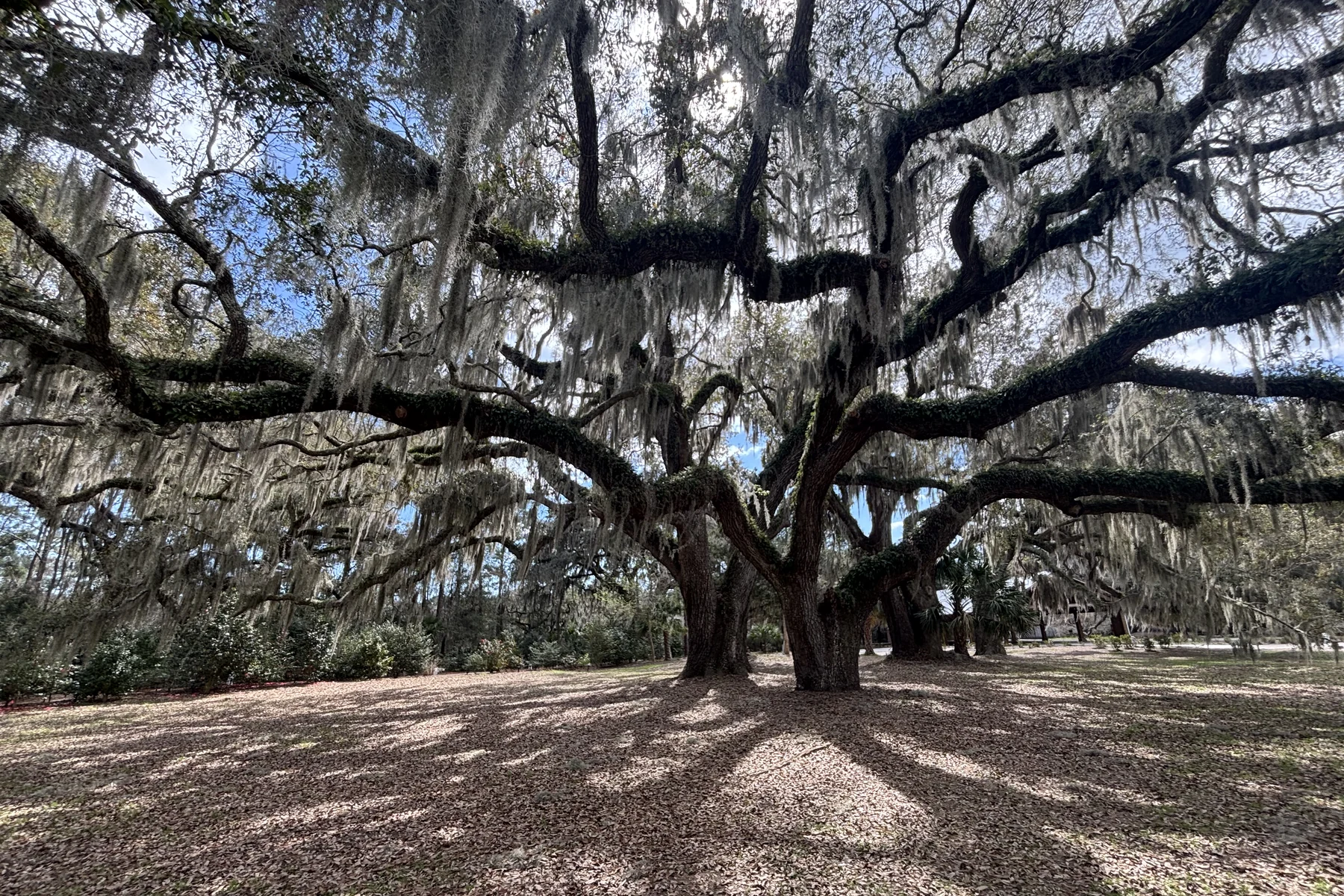
Honey Horn gives Hilton Head’s natural and cultural surroundings a shared setting. The Coastal Discovery Museum makes its home here, among historic buildings, live oaks and the salt-marsh landscape. Treat the visit as a chance to look closely rather than a list of stops to finish.
Begin with the museum
Look at the museum’s visitor information before arriving. Confirm current opening arrangements and decide whether you want an independent visit or a scheduled program. The museum’s program schedule is the place to check dates and any separate booking requirements.
A short look through the available interpretation can give names and context to things you later notice outside. You can then follow a few questions through the grounds instead of trying to see every feature at once.
Move from canopy to marsh
The museum’s grounds guide describes nature trails, gardens and wooden boardwalks extending toward the Jarvis Creek salt marsh. These are different environments within the same visit. The live-oak photograph above introduces the shaded grounds, not a beach access route.
- Pause beneath the canopy and look at the shape and scale of the trees.
- Use interpretive panels to connect the plants and waterways with their setting.
- Follow designated routes, and check any temporary closures before continuing.
Make the visit your own size
Choose the length of your visit around your group’s attention and energy. A smaller outing with time to read can be more satisfying than rushing between every feature. If walking distance or surface is important, ask the museum for current route information instead of assuming that all paths are alike.
Bring your curiosity, but let the site’s rules set the boundaries. Stay on the routes provided, give wildlife space and keep the grounds available for the people using them after you. An outdoor setting also means you should have a simple weather alternative.
Continue the story elsewhere
Honey Horn is one starting point in a much larger island story. Our guide to Mitchelville and living island history points toward institutions with their own voices and responsibilities. If you are combining the museum with the coast, compare access points in the beach-day guide and keep the connection realistic.