
Hilton Head’s history deserves more than a scenic detour. The island includes places where communities built education, organized civic life and preserved culture through profound change. Begin with the people and institutions responsible for interpreting that history today.
Start with Mitchelville’s own account
Historic Mitchelville Freedom Park’s history describes the community established in 1862 and its development as a self-governed town of formerly enslaved people. Its interpretation places civic organization and the lives of its residents at the center of the story.
Read that account before a visit, then use the park’s current visitor information to plan your time. Distinguish the historical community from the contemporary park that interprets it. A short guide cannot replace that institution’s fuller account or the work of community historians.
Keep each place’s identity clear
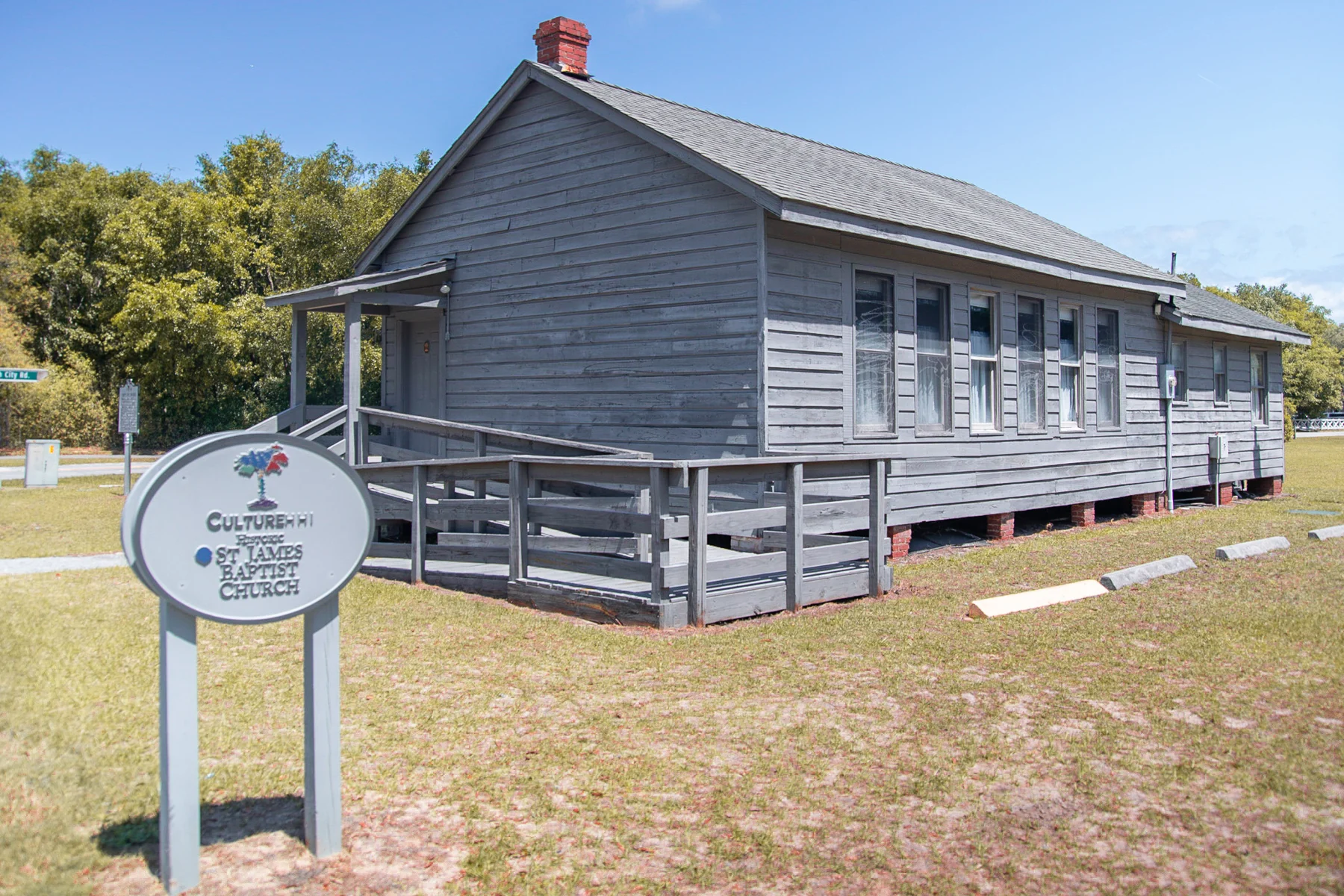
The opening photograph shows Cherry Hill School, not Mitchelville Freedom Park. The Town’s Gullah Geechee Culture Preservation Project report identifies the school as a significant community institution built around 1937 and associated with descendants of Mitchelville.
Its distinct building and history help illustrate why island heritage should be understood through named places rather than a single generic image. Check current access and interpretation with the responsible organization; a historic designation does not by itself promise that a building is open for an interior visit.
Listen without turning culture into a backdrop
Gullah heritage is part of contemporary community life, not simply a decorative style from the past. Look for interpretation that names its sources and speakers. When choosing a talk or guided visit, read how the provider describes its relationship to the history and the community.
- Give interpretation time instead of treating it as a quick photo stop.
- Respect private homes, worship spaces and other places that are not visitor attractions.
- Ask before photographing a person or recording a conversation.
- Keep a place name and a source with any historical detail you share afterward.
Build a considered day
Allow space between visits to absorb what you have learned. A cultural stop and an outdoor walk need not compete, but neither should be squeezed into an unrealistic itinerary. Honey Horn offers another institutional setting for exploring the island, while our planning guides help connect your chosen places.